

 Request a Service
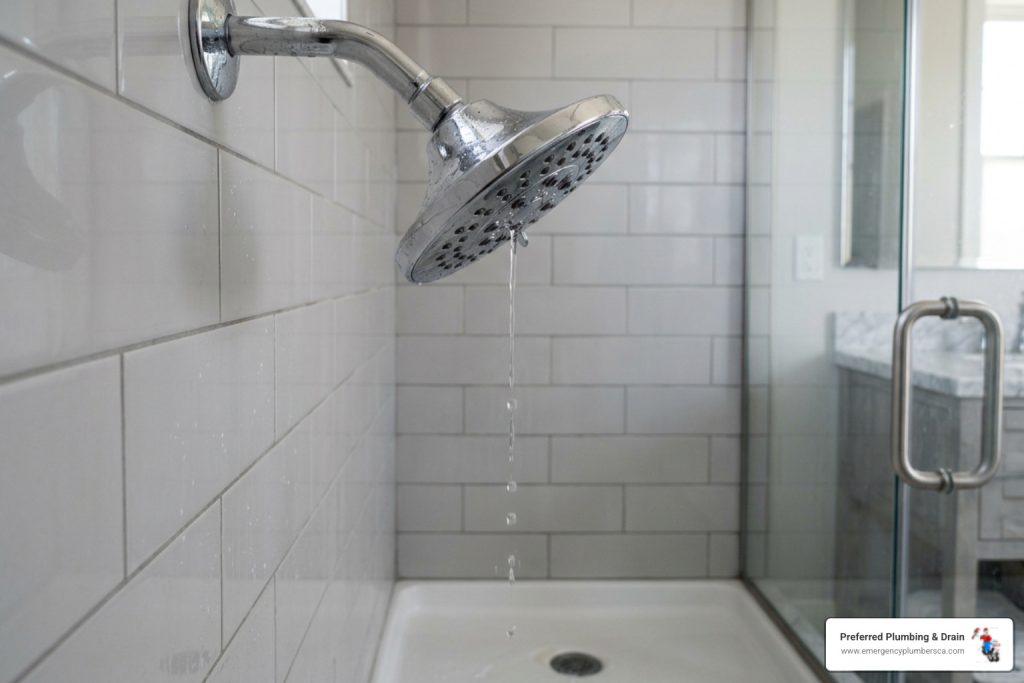
Low Hot Water Pressure: Troubleshooting Your New Heater
When Your Hot Water Slows to a Trickle: What’s Really Going On
Low water pressure from water heater systems is one of the most common plumbing complaints homeowners face — and the good news is it’s usually fixable once you know the cause.
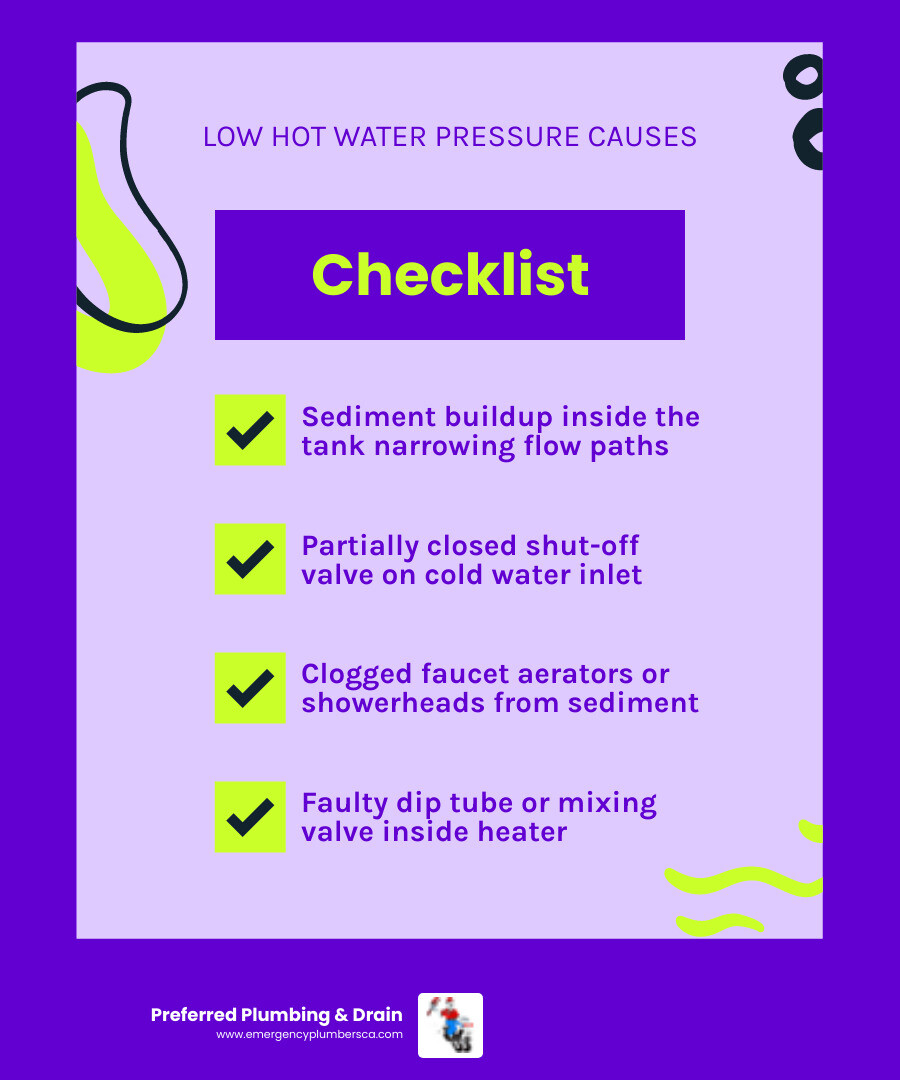
Quick answer: The most common causes of low hot water pressure include:
- Sediment buildup inside the tank narrowing internal flow paths
- Partially closed shut-off valve on the cold water inlet to the heater
- Clogged faucet aerators or showerheads from disturbed sediment
- Faulty dip tube or mixing valve inside the water heater
- Corroded or undersized pipes in the hot water branch lines
- Pressure Reducing Valve (PRV) that needs adjustment or replacement
If your cold water runs strong but hot runs weak, the problem is almost always in the water heater itself or the hot water plumbing — not your main supply line.
Low hot water pressure can hit at the worst times. A weak shower before work. A sink that barely rinses the dishes. Sometimes it happens gradually. Other times it shows up right after a water heater flush or replacement — which is incredibly common and usually a quick fix.
I’m Bryan Graves, and I’ve been diagnosing and fixing plumbing issues like low water pressure from water heater systems since 1989. In this guide, I’ll walk you through exactly how to find the source of your problem and what to do about it.
Diagnosing Low Water Pressure from Water Heater Systems
When you turn on the tap and only get a sad dribble of hot water, it’s easy to feel frustrated. But before we start tearing apart the plumbing, we need to play detective. The first step in solving low water pressure from water heater issues is figuring out where the bottleneck is located.
We often see homeowners confuse “water flow” with “water pressure,” but they are different. Think of water pressure as the “push” behind the water (measured in PSI), while flow is the actual volume of water coming out of the tap (measured in gallons per minute). If your pipes are clogged with sediment, you might have great pressure, but the flow is restricted—like trying to drink a thick milkshake through a tiny, pinched straw.
To start your diagnosis, perform a “Hot vs. Cold Test.” Go to the faucet where the pressure feels lowest. Turn on the cold water all the way and observe the stream. Now, turn off the cold and turn on the hot. If the cold water is blasting but the hot water is just a trickle, you’ve successfully isolated the problem to the hot water side of your system.
If both are weak, the issue might be your main supply or a residential water pressure regulator. For more on the basics of how your home handles water, the EPA: Household Water Pressure Basics is a great resource to understand the standards for water efficiency.
Understanding Normal PSI Ranges
In the Greater Sacramento Area, most homes should operate within a normal range of 45 to 80 PSI. If your pressure drops below 40 PSI, you’re going to notice it in the shower. If it climbs above 80 PSI, you risk damaging your appliances and causing leaks.
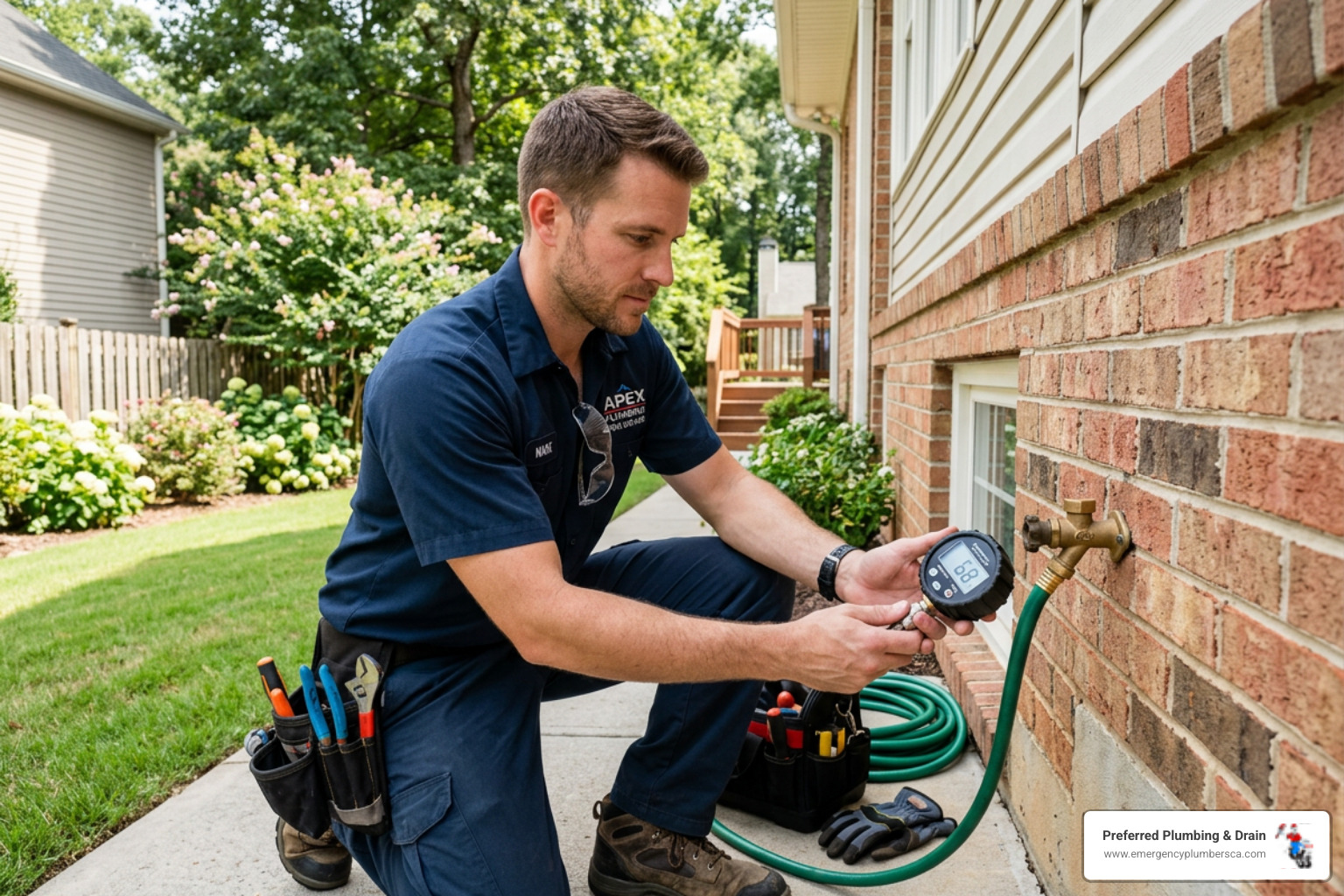
To get an accurate reading, you can buy a simple pressure gauge at a hardware store in Roseville or Folsom for about $10 to $15. Screw it onto an outdoor hose bib (spigot), turn the water on, and see where the needle lands. If the gauge shows a healthy 60 PSI but your hot water is still weak indoors, the “push” is there, but something is blocking the path. You can learn more about water systems and how they are regulated through official health department guidelines.
Identifying the Scope of the Problem
Is the problem everywhere or just in one spot?
- Fixture-Specific: If the low pressure is only in the master bathroom shower, the issue is likely a clogged showerhead or a faulty mixing valve in that specific shower.
- Temperature-Specific: If hot water is weak throughout the entire house but cold water is fine, the problem is definitely the water heater or the main hot water trunk line.
- Whole-House: If everything is weak, check your main shut-off valve or your Pressure Reducing Valve (PRV).
If you’ve noticed that your water pressure is suddenly low across the board, it could even be a municipal issue like a water main break in your neighborhood.
Common Causes of Low Hot Water Pressure
Water heaters are essentially big tanks where minerals love to hang out. Over time, these minerals—mostly calcium and magnesium—settle at the bottom and create a layer of “scale” or sediment. This is the number one enemy of hot water flow.
Internal Components and Low Water Pressure from Water Heater Tanks
Inside that big metal tank, several components can fail and restrict your flow:
- The Dip Tube: This is a plastic pipe that directs incoming cold water to the bottom of the tank to be heated. If it cracks or disintegrates, plastic shards can travel into your hot water lines and clog your faucets.
- Mixing Valves: Many modern heaters use a mixing valve to blend hot and cold water to prevent scalding. If this valve gets gummed up with mineral deposits, it can throttle the hot water flow.
- Heat Traps: These are small valves or loops in the pipes at the top of the heater designed to save energy. If the flap or ball inside a heat trap gets stuck, it can act like a dam, stopping your hot water from leaving the tank.
- Shut-off Valves: Every heater has a cold-water inlet valve. Sometimes these are old “gate valves” that can break in a partially closed position, even if the handle looks like it’s turned all the way.
For a deeper dive into these parts, check out our guide on water heater services.
Plumbing Components Outside the Heater
Sometimes the heater is fine, but the supporting cast is failing.
- Pressure Reducing Valve (PRV): This bell-shaped device sits on your main water line. If it fails, it can restrict flow to the whole house or cause pressure to fluctuate wildly.
- Galvanized Pipes: If your home in Sacramento or Oakland was built before the 1960s, you might have galvanized steel pipes. These corrode from the inside out, eventually filling with rust until there’s barely any room for water to pass through.
- Expansion Tanks: These small tanks help manage pressure spikes. If they fail, they can occasionally cause weird pressure issues in the system.
If you’re in the East Bay and suspect your pipes or PRV are the culprits, you might need a water heater repair in the East Bay to diagnose the external plumbing connections.
Troubleshooting Low Water Pressure from Water Heater After Installation
It’s the ultimate irony: you spend money on a brand-new water heater, only to find the water pressure is worse than before. Don’t panic—this is actually very common and usually doesn’t mean the new heater is defective.
Dealing with Post-Installation Debris
When we install a new heater, we have to cut pipes and move things around. This vibration dislodges old sediment and “pipe scale” that has been sitting dormant for years. As soon as you turn the water back on, that junk rushes through the lines and gets caught in the smallest openings: your aerators and showerheads.
- Aerator Clogs: The tiny screens at the end of your faucets are the first place debris lands.
- Showerhead Grit: Modern low-flow showerheads have tiny apertures that clog easily with even a single grain of sand.
- Cartridge Flushing: Sometimes debris gets stuck inside the faucet cartridge itself, requiring you to take the handle apart to flush it out.
Interestingly, your home’s plumbing ventilation can also play a role in how water moves through your system. While vents mostly handle drainage, a clogged plumbing vent can cause gurgling and slow drains, which sometimes mimics the frustration of poor water flow. You can spot the symptoms of a bad plumbing vent if you hear sucking sounds at your sinks while the shower is running.
Adjusting the Pressure Reducing Valve (PRV)
If your new heater seems to have lower pressure across all fixtures, the installer might have adjusted your PRV, or the new heater’s internal resistance is slightly higher than your old one.
The PRV is usually a bell-shaped brass valve with a screw on top. To increase pressure, you typically loosen the locknut and turn the adjustment screw clockwise. Do this in small increments (half-turns) and check the pressure with a gauge. Never exceed 80 PSI, or you’ll be calling us for a burst pipe repair!
Immediate DIY Steps and Preventive Maintenance
You don’t always need a pro to fix low water pressure from water heater issues. Here are the steps we recommend for the DIY-inclined homeowner.
How to Flush Your Water Heater
We recommend flushing your water heater at least once a year—especially in areas like Davis or Woodland where the water can be a bit harder.
- Safety First: Turn off the power (at the breaker for electric) or the gas (to “Pilot”) and shut off the cold water inlet valve.
- Connect a Hose: Attach a standard garden hose to the drain valve at the bottom of the tank.
- Drain it: Run the other end of the hose to a floor drain or outside. Open a hot water faucet somewhere in the house to break the vacuum.
- Flush: Open the drain valve. Let the water run until it’s clear of any white or brown “flakes” (sediment).
- Refill: Close the drain valve, turn the cold water back on, and wait for the tank to fill before turning the power/gas back on.
Cleaning Fixtures and Aerators
If the pressure is low at just one sink, it’s almost certainly the aerator.
- Use water pump pliers to gently unscrew the aerator from the tip of the faucet.
- Soak the parts in a bowl of white vinegar for 30 minutes to dissolve mineral buildup.
- Rinse and reinstall.
For showerheads, you can tie a bag of vinegar around the head with a rubber band and let it soak overnight. Keeping your fixtures clean isn’t just about pressure; it’s also about hygiene. The CDC: Legionella and Hot Water Systems notes that maintaining clean, well-functioning hot water systems is vital for home health.
Frequently Asked Questions about Hot Water Pressure
What is the difference between water flow and water pressure?
Pressure is the force (PSI) pushing the water through your pipes. Flow is the volume (Gallons Per Minute) that actually exits the faucet. You can have high pressure but low flow if your pipes or aerators are restricted.
Why is my hot water pressure low but the cold is fine?
This usually means the restriction is inside the water heater (sediment, faulty dip tube, or heat trap) or in the hot water supply lines. Since the cold water bypasses the heater, it remains strong while the hot water is throttled.
How often should I flush my water heater to prevent low pressure?
In the Greater Sacramento Area, once a year is the standard. If you have very hard water or an older tank, doing it every six months can help extend the life of your heater and keep your pressure consistent.
Conclusion
Dealing with low water pressure from water heater problems doesn’t have to be a mystery. By testing your hot versus cold flow, checking your aerators, and keeping up with annual flushing, you can solve most issues on your own.
However, if you’ve tried the DIY steps and your shower still feels like a leaky faucet, or if you suspect your PRV or main lines are failing, it’s time to call in the experts. At Preferred Plumbing & Drain, we provide 24/7 emergency services throughout the Greater Sacramento Area, including Elk Grove, Folsom, and Roseville. We can usually be at your door within 60 minutes, and we never charge extra for nights, weekends, or holidays.
Our licensed, bonded, and insured team is ready to help you get your hot water back to full strength. Schedule a residential water pressure inspection with us today and stop settling for a weak shower!


Bryan Graves has been in the plumbing and drain cleaning industry since 1989, starting as a service technician. He served as Vice President to the CEO until 2006, which is when he started his own business, Preferred Plumbing & Drain. For the past 19 years, he has kept a 97% customer satisfaction rating by making sure every customer of Preferred Plumbing & Drain is happy enough to recommend us to others. When Bryan is not working, he enjoys spending time with his family, going boating, and watching sports.