

 Request a Service
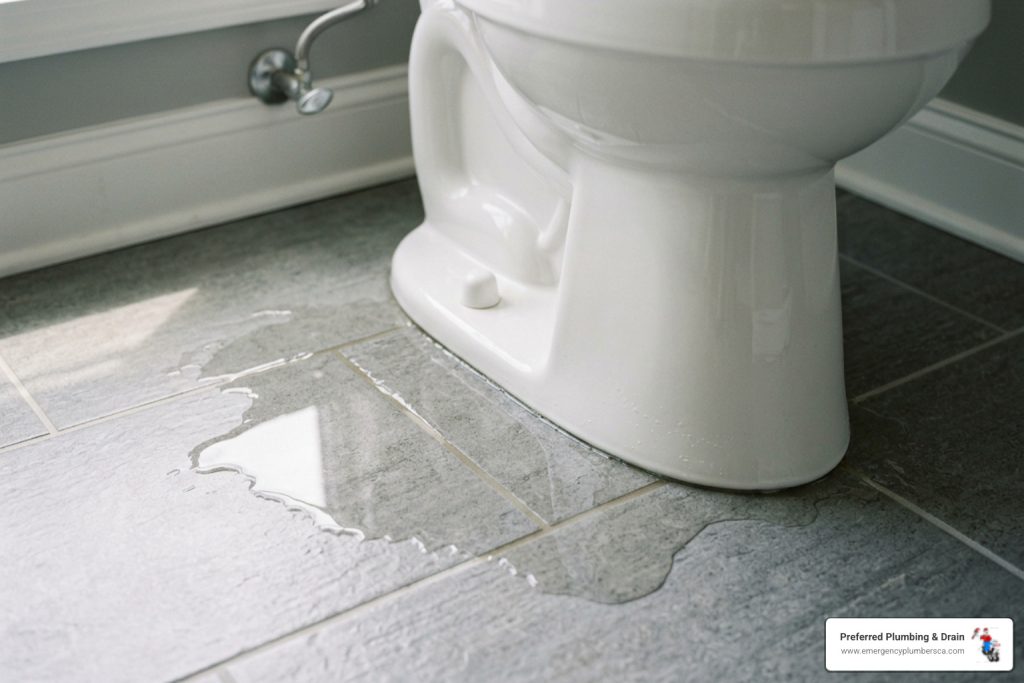
Don’t Let Your Money Flush Away: Reasons for Toilet Base Leaks
Why Water Pools Around Your Toilet Base (And What It’s Costing You)
The reasons toilet leaks at base are almost always one of these six culprits:
| Cause | How Common |
|---|---|
| Damaged or worn wax ring | Most common |
| Loose tee bolts (floor mounting bolts) | Very common |
| Cracked toilet flange | Common |
| Leaking water supply line | Moderate |
| Cracked porcelain bowl | Less common |
| Clogged drain line pressure | Less common |
That puddle on your bathroom floor isn’t just annoying. It’s expensive.
A single leaky toilet can waste 200 gallons of water per day — that’s up to 6,000 gallons every month. For California homeowners already dealing with high utility rates, that kind of waste adds up fast.
And water damage doesn’t wait. The longer a base leak goes unaddressed, the greater the risk of rotting subfloors, mold growth, and costly structural repairs that far exceed the original fix.
The good news? Most toilet base leaks have a clear cause — and a straightforward solution.
I’m Bryan Graves, and I’ve been diagnosing and fixing plumbing problems like these since 1989. Over more than three decades of hands-on field work and running my own plumbing company, I’ve seen every variation of the reasons toilet leaks at base — from a simple bolt that needs a quarter-turn to a fully failed wax ring soaking through a subfloor. Let’s walk through exactly what’s going on with your toilet and how to fix it.
Is It a Real Leak or Just Condensation?
Before we start pulling out the heavy tools, we need to determine if you actually have a plumbing failure or if your toilet is just “sweating.” In the humid climates of the East Bay or Sacramento, condensation is a frequent trickster.
The Sweating Toilet
Condensation occurs when the cold water inside your toilet tank and bowl meets the warm, humid air of your bathroom. This temperature fluctuation causes moisture beads to form on the exterior of the porcelain. Over time, these beads drip down and pool at the floor, making it look exactly like the reasons toilet leaks at base we usually investigate.
How to Tell the Difference
To find out why your toilet is leaking at the base, try these diagnostic steps:
- The Wipe Test: Dry the entire exterior of the toilet and the floor with a towel. Wait and watch. If moisture beads form evenly all over the porcelain, it’s likely condensation.
- The Food Coloring Test: Drop a few drops of dark food coloring into the toilet tank (not the bowl). Do not flush. If colored water appears on the floor after an hour, you have a leak from the tank or the tank-to-bowl gasket.
- The Flush Test: If the floor stays dry until you flush, the issue is almost certainly the wax ring or the flange.
If you notice persistent puddles regardless of humidity levels, these are clear signs you need toilet repair to prevent structural damage to your home.
6 Common Reasons Toilet Leaks at Base
When we receive a service call in San Jose or Modesto for a wet bathroom floor, we typically find one of these six issues.
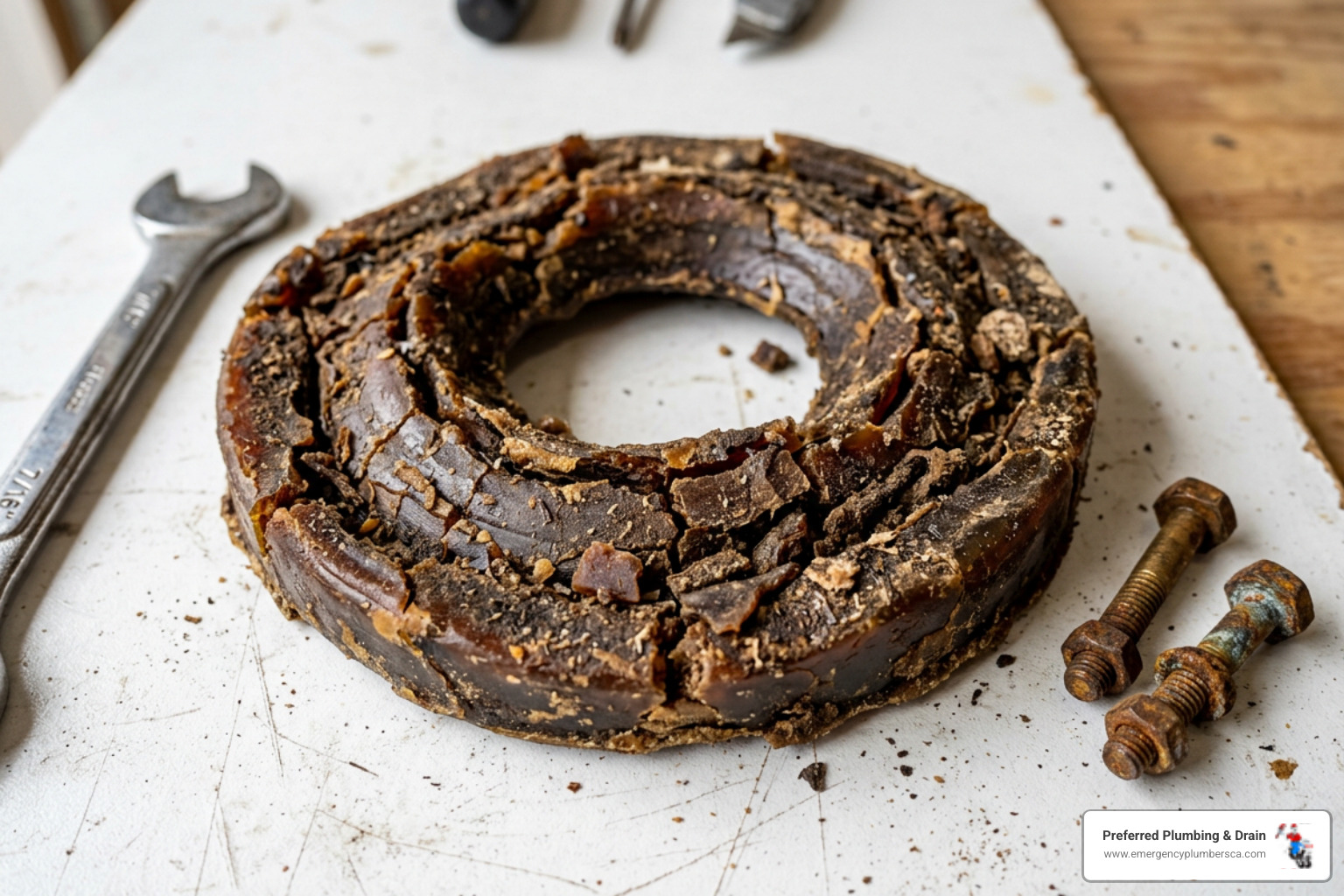
1. Wax Ring Failure
The wax ring is the unsung hero of your bathroom. It creates a watertight and airtight seal between the bottom of the toilet and the drain pipe (the flange). Over time, wax rings can dry out, crumble, or become flattened. Once that seal is broken, water escapes every time you flush.
2. Loose Tee Bolts
Those two plastic caps on either side of your toilet base cover the tee bolts (or floor bolts). Their job is to anchor the toilet firmly to the floor. If these bolts wiggle loose, the toilet will rock. That rocking motion eventually breaks the wax seal, leading to a leak.
3. Cracked Toilet Flange
The flange is the circular fitting that connects the toilet to the sewage system. If the flange is cracked—often due to age or a DIYer overtightening the bolts—it won’t hold the tee bolts steady, causing the seal to fail repeatedly.
4. Water Supply Line Leaks
Sometimes the leak isn’t coming from under the toilet at all. The water supply line or the shutoff valve behind the toilet can develop a slow drip. Because of gravity, that water runs down the hose and pools at the base, mimicking a floor leak.
5. Cracked Porcelain Bowl
While porcelain is incredibly strong, it can develop hairline cracks. If a crack occurs in the “trap” area or near the base, water will seep out constantly. Unfortunately, a cracked bowl usually means it’s time for a full toilet replacement.
6. Clogged Drain Pressure
If your main sewer line has a partial blockage, the backup creates immense pressure. When you flush, the water has nowhere to go but out through the weakest point—which is often the wax ring seal.
Comparison of Common Leak Causes
| Cause | Primary Symptom | Repair Difficulty |
|---|---|---|
| Wax Ring | Leak occurs only during/after flush | Moderate (Requires lifting toilet) |
| Loose Bolts | Toilet rocks or wobbles when sat on | Easy (Tighten with wrench) |
| Supply Line | Constant dripping behind the toilet | Easy (Replace hose or valve) |
| Cracked Bowl | Constant puddle; water level in bowl drops | Hard (Requires replacement) |
How to Diagnose and Fix a Leaky Toilet
If you’re a handy homeowner in Roseville or Elk Grove, you might want to tackle some of these toilet repair tasks yourself. Here is how we recommend starting your diagnosis.
Troubleshooting the Primary Reasons Toilet Leaks at Base
Start with the simplest fix: The Wobble Test. Grasp the toilet bowl and gently try to rock it from side to side. If it moves even a fraction of an inch, your tee bolts are loose.
- Remove the Caps: Pop off the plastic covers at the base.
- Inspect for Rust: If the bolts are rusted through, they need to be replaced.
- Tighten Carefully: Use an adjustable wrench to tighten the nuts. Warning: Do not overtighten! Porcelain is brittle; if you crank it too hard, you will crack the base of the toilet, turning a $5 fix into a $500 replacement.
- Check the Gaskets: If the leak persists, check the rubber seals where the tank meets the bowl. A running toilet can sometimes cause vibrations that loosen these connections.
Step-by-Step Wax Ring Replacement
If tightening the bolts doesn’t stop the leak, you likely need a new wax ring. This is a common solution for the most frequent reasons behind a clogged or leaking toilet.
- Shut Off Water: Turn the silver valve behind the toilet clockwise until it stops.
- Drain the System: Flush the toilet and hold the handle down to remove as much water as possible. Use a sponge to soak up the remaining water in the bowl and tank.
- Disconnect: Unscrew the water supply line and remove the floor nuts.
- The Lift: Lift the toilet straight up and set it aside on an old towel (to protect your flooring).
- Scrape and Clean: Use a putty knife to scrape the old, sticky wax off the floor flange and the bottom of the toilet. This is messy but essential for a new seal.
- Install New Ring: Place a new wax ring (we recommend the ones with a plastic “horn” or flange guide) onto the floor flange.
- Reseat: Lower the toilet back onto the bolts. Use your body weight to press it down into the wax.
- Reconnect: Tighten the bolts, reconnect the water, and perform several test flushes.
The Hidden Dangers of Ignoring a Leaky Toilet
We’ve seen many homeowners in Contra Costa County wait weeks to call us because the leak “wasn’t that bad.” Unfortunately, the damage you can’t see is often the most dangerous.
- Subfloor Rot: Most bathrooms have a wooden subfloor. Constant moisture leads to rot, which can eventually cause the toilet to literally fall through the floor.
- Mold and Mildew: Damp, dark spaces under a toilet are breeding grounds for black mold, which can impact your family’s respiratory health.
- Sewer Gas: The wax ring doesn’t just stop water; it stops sewer gases from entering your home. If you notice a “rotten egg” smell, your seal is broken.
- Bacteria Exposure: Toilet water (even “clean” water from a flush) carries bacteria. A leak at the base spreads these germs across your bathroom floor where children and pets walk.
Financial Impact of These Reasons Toilet Leaks at Base
Ignoring the reasons toilet leaks at base is a guaranteed way to empty your wallet.
- Water Waste: As mentioned, 6,000 gallons a month can spike a water bill by $70 to $100 depending on your local rates in the Greater Sacramento Area.
- Structural Repair: Replacing a rotted subfloor and new tile can cost thousands.
- Professional Intervention: While a simple wax ring replacement is affordable, troublesome toilets need professional plumbing attention if the flange is broken or the drain line is collapsed.
Frequently Asked Questions about Toilet Base Leaks
How much does it cost to fix a toilet leaking at the base?
A DIY wax ring kit costs about $10 to $20. If you hire a professional, the average cost for a standard base leak repair ranges from $150 to $300. If the flange is broken or the floor requires repair, the cost can increase.
Can I still use my toilet if it’s leaking from the bottom?
We strongly advise against it. Every flush sends more water into your floorboards. If you must use it, do so sparingly and mop up the water immediately, but prioritize a repair within 24 hours.
How do I prevent future toilet base leaks?
- Don’t rock the boat: Never sit on the tank or lean heavily to one side.
- Check the bolts: Once a year, give the base a gentle nudge to see if it’s loose.
- Avoid Harsh Chemicals: Some “drop-in” bleach tablets can degrade rubber seals and gaskets over time.
Conclusion
Identifying the reasons toilet leaks at base is the first step toward protecting your home and your budget. Whether it’s a simple bolt tightening or a full wax ring replacement, addressing the issue today prevents a catastrophe tomorrow.
If you’re in Sacramento, Stockton, Oakland, or anywhere in the Greater Sacramento Area and the DIY route feels a bit overwhelming, we are here to help. At Preferred Plumbing & Drain, we provide 24/7 emergency services for those moments when a small leak turns into a big flood. We are licensed, bonded, and insured, and we never charge extra for nights, weekends, or holidays. We can usually have a technician at your door within 60 minutes to get your bathroom back in working order.
Don’t let your money flush away. Contact us for professional toilet repair services today and rest easy knowing your plumbing is in expert hands.

Bryan Graves has been in the plumbing and drain cleaning industry since 1989, starting as a service technician. He served as Vice President to the CEO until 2006, which is when he started his own business, Preferred Plumbing & Drain. For the past 19 years, he has kept a 97% customer satisfaction rating by making sure every customer of Preferred Plumbing & Drain is happy enough to recommend us to others. When Bryan is not working, he enjoys spending time with his family, going boating, and watching sports.